Showing posts with label honeysuckles. Show all posts

Saturday, October 03, 2009

Truth About Life: Part Two

Things I'm certain are true ~ part 2! While the grass may not be greener on the other side of my fence, it is most definitely greener in Oregon.

Which is why, every September, this desert rat needs an Oregon fix.

Right after I have my annual breakdown.

Oh.... it's not a seriously crazy breakdown. Just a desperate desire to partake of some normal weather patterns.

Gotta love it: Potted vines take over the seating areas.

You see, it rains a lot in Oregon. While that might make Oregonians a little depressed, it is precisely what I'm looking for!

Honeysuckles climb the porch pillars at the Wine Country Inn.

Summer weather in my high plains desert is bright and sunny, hot and dry. Day in... day out... After about 4 hard gardening months of that business I'm ready to see how the other half lives.

And, that's when we skedaddle ~ to Oregon.

A wisp of fog hangs over the entrance to our inn.

From Joan's back porch we inspect the gardens and grape vines.


If you're in the mood for greener pastures, it doesn't get much greener than the Dundee Hills of Oregon.

Wednesday, May 30, 2007

Honeysuckles

After a welcome week of warm weather, the honeys are in bloom. As kids, we'd pick the petals and taste the sweet nectar from these big, climbing vines.

Bush Honeysuckles make ideal screens and hedges, giving privacy around our homes.

Vine Honeysuckles climb trellises, porches and arbors. Most bloom all summer ~ a favorite of hummingbirds and butterflies.

Climbing Vine: Lonicera brownii Dropmore Scarlet Honeysuckle, USDA zones 4-8, is a prolific bloomer from June through October.

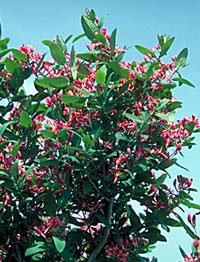
Flowering Shrub: Lonicera tatarica Pink Tatarian Honeysuckle, USDA zones 3-8, is a native of Southern Russia and Turkistan. After a short-lived burst of fuschia flowers sturdy branches provide a colorful windbreak for tender perennials.

Put a little happiness in your garden. Butterflies, hummingbirds and rambunctious little kids will thank you.

Wednesday, August 02, 2006

Little, Bitty Hummers

They weigh less than a penny, fly 50 mph and are smaller than your thumb.

IF I owned the camera of my dreams, I'd show you Calliope Hummingbirds, flitting around this honeysuckle vine. All photos, so far, are just a blur.

In Western gardens, you can time their arrival. They follow the blooming of columbines and lilacs. But, they'll hang around all summer if you offer them the right kind of plants.

Hummingbirds can't smell. Their favorites are big nectar producers with red, orange and pink, tubular flowers. They also love mosquitoes and gnats - so it's to everyone's benefit to invite hummers into the yard.

Ever wonder why hummingbirds ignore your garden and gather near the feeder? Cultivated hybrid plants produce very little nectar, compared to native plants.

Here's what's growing in my hummingbird garden:*
  • Bee Balm
  • Columbine
  • Coral Honeysuckle
  • Hummingbird Mint
  • Lupine
  • Penstemon
Mixing hummingbird nectar is easy: 1 part white sugar with 4 parts water. Boil, cool, then serve it in a red-colored feeder. Change it every 3-4 days.

PS: They can fly backwards!

* Each of these hearty Western perennials is USDA zone 5 (or colder.) Check out Spring Hill Nursery for plant combinations to attract little hummers. Visit the Hummingbird Society for more cool ideas!